Minneapolis, Minnesota, January 2025
 I recently presented my frictionless data strategy to a group of CIOs, contrasting it with the “democratic” model that most companies use for their data and analytics. Today, many analysts become experts at self-service business intelligence (BI) tools (“citizen developers”) and work independently to tease insights from their company’s data. Data flows from systems, through analysts and managers (who interpret the data), and from there to executives for decisions.
In the democratic model, data flows through people, not to people.
One CIO asked me, “Isn't it better for all data to flow through analysts? Isn't it necessary for people to interpret the data?” Then, another CIO asked, “Can we eliminate data analysts with AI?”
I answered them both by explaining how a company makes better decisions when analysts and IT work together to make the data flow freely to everyone. There’s no downside to collaboration.
Later that week, I gave the same presentation to a group of university leaders. “How do you know when people should work autonomously with data instead of forcing them to use centralized, structured data?” they asked.
They wanted to know if there was any value in giving people the freedom to do whatever they wanted with the data. Nothing forces educators to think about mundane, corporate concerns like data security, system reliability, or managing software costs. They simply want to know if there’s a tipping point in the balance between structured data work and the freedom that comes with autonomous data work. At what point can people get more value from the data when they work independently?
These questions highlight something that theorists and practitioners agree on: most companies haven’t found a balance between ungoverned, democratic data work and structured, fully regulated IT solutions. New self-service software solutions haven’t improved decision-making.
IT teams really can make exploration easier for everyone by giving them better data and more freedom to explore it, not more software.
The Story of Self-Service BI
Fifteen years ago, software vendors addressed a very real problem: people wanted data, IT solutions weren’t meeting their needs, and project pipelines just slowed things down.
And they were right. The typical IT project management approach (the “waterfall” process) starts with user requirements and ends with IT delivering to a specification.Analytics works in the opposite direction: people don’t know what they need next until after they explore the data.
Those vendors developed new software tools that made it easier for analysts to connect to their company’s data and turn it into charts and graphs without learning a programming language. Their marketing machines kicked into high gear, and they coined a new name - “the democratization of data” - and they still advocate for autonomous data work today; when everyone needs a license, it’s a prime market opportunity for their software. Companies thoroughly bought into the idea: they spent the last 15 years replacing IT people by shifting their data work to analysts. Today, companies spend about $10B a year (worldwide) on self-service BI tools, and analysts expect that total to grow to $28B by 2032.
Analysts embrace any solution that gets data to them faster, and that makes self-service BI very attractive.
But it quickly becomes unwieldy. Have you seen a company with thousands of dashboards? Hundreds of business analysts learning SQL? Citizen developers building dashboards to their heart’s content sounded great when the vendor pitched the idea to frustrated end users, but that didn’t help companies align and accelerate decisions as promised. It also created new problems, like duplication (multiple people doing the same work), exfiltration (people taking data with them), siloed and “massaged” data, and conflicting answers to the same questions.
That’s chaos, not democracy.
Share the Road
One CIO asked me, “Shouldn’t we serve people data like a gas station serves people fuel? It works better when everyone fills their tank themself.” “No,” I said, “Data isn’t like gasoline. It’s more like food. And we don’t send elite chefs to the fields to hunt and gather ingredients every time they prepare a meal.” Grocery stores make shopping for food convenient for me by anticipating my needs and making my groceries easy to find.
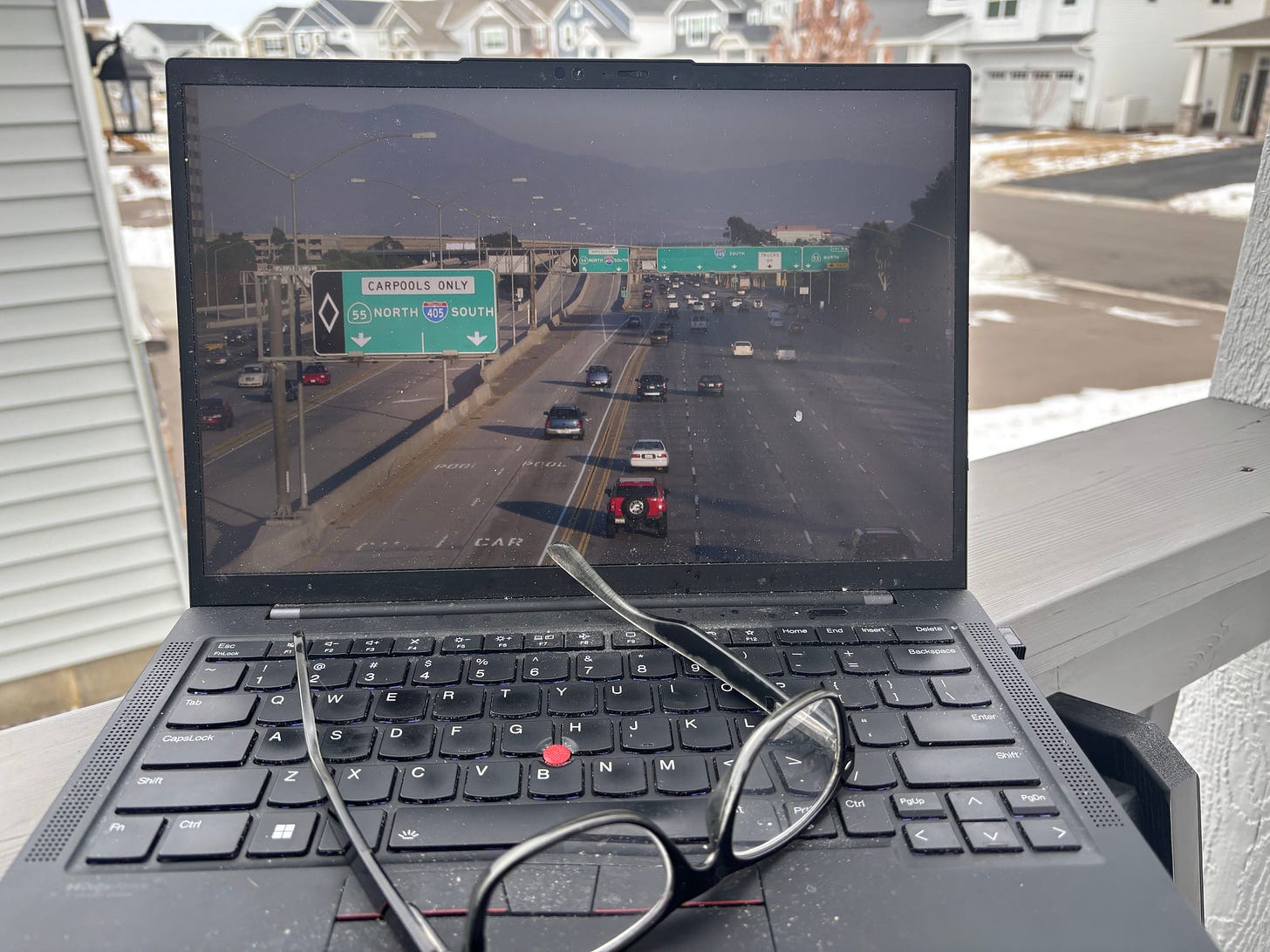
I like to call my approach to data the “federal” model. In this approach, IT teams provide core master data that connects all the company's business processes. That requires IT teams to understand the data and business processes that tie a company's different functions together and provide those data sets as a shared “data highway.” Just like theUS Interstate Highway system helped people across America move faster, this approach saves work for business teams and, more importantly, helps them share the same framework for reporting and analysis.
With the federal data model, everyone shares the road.
Analysts should be free to explore all the data, but IT teams shouldn’t use that as cover for their lack of business awareness. Technology alone (like self-service BI) won’t help IT teams collaborate better with their business colleagues. Instead, a better data strategy that understands how to connect data to decisions helps analysts explore data freely.
That’s how you finally fulfill the promise of the democratic model.