Data Management Best Practices for Leaders

- Irvine, California, September 2025
To celebrate the first anniversary of my Frictionless Data newsletter, I’m republishing my first article. Find the entire archive of articles on my Substack homepage.
Years ago, Bruce Kiddoo, then the CFO of Maxim Integrated, made a simple comment to me:
“Your data team helps this company make better decisions.”
Talk about connecting the dots. Bruce’s vision took all the work we did and linked it to its ultimate purpose, forcing me to rethink all of our data solutions. I realized that we should focus on management decisions first, data second.
IT professionals (like me) typically work on the largest datasets first, like shipments or sales opportunities. After all, that’s the easiest data to find.
- Business leaders, on the other hand, spend most of their time planning investment decisions, like which products to launch, which films to produce, or what courses to offer. Systems don’t generate this data.
I can’t tell you how much this perspective changes a data team’s roadmap. When I speak with data leaders, they wonder why mid- and upper-level managers don’t use their company’s data platform. Then they realize why: they’re missing most of the data decision makers use.
Business plan data often lives on the analyst's desktop. Data teams can’t see this data, and it blinds them to the opportunity to become a partner with their business leaders.
Real Data?
Not everyone shares this perspective. A popular business podcaster declared that plans are not real data and “only fact data counts.” Everything else is opinion and should be ignored, he argued. But give that some thought for a moment: if you only use data that comes from a transaction system, then you’re always looking at data about the past. You’ll always be making operational decisions, not the strategic decisions that change the direction of a company.
People make plans long before any business activity happens, and many plans never make it through the approval phase. That’s the point – people make investment decisions based on the credibility of their plan data.
Where It’s Hiding
I sometimes challenge data leaders to meet with a finance manager and ask them where they keep data for ROI (return on investment) analysis. They’re surprised to find out how accurately I predicted what they’d find on their desktops. But I know this because I have an unfair advantage: as a financial analyst, the data I shared with executives usually came from my own Excel files.
Here's a simple framework you can use to find gaps like these in your data solution. For every business function at your company (like sales, R&D, or operations), you should have three types of data in your analytics system: plan, actual, and forecast. Ask if your analytics platform includes all kinds for every functional area. Then look to see if you’ve connected that data to the related master data that holds your business processes together (like products, customers, and financial accounts).
Use this matrix to identify the gaps:
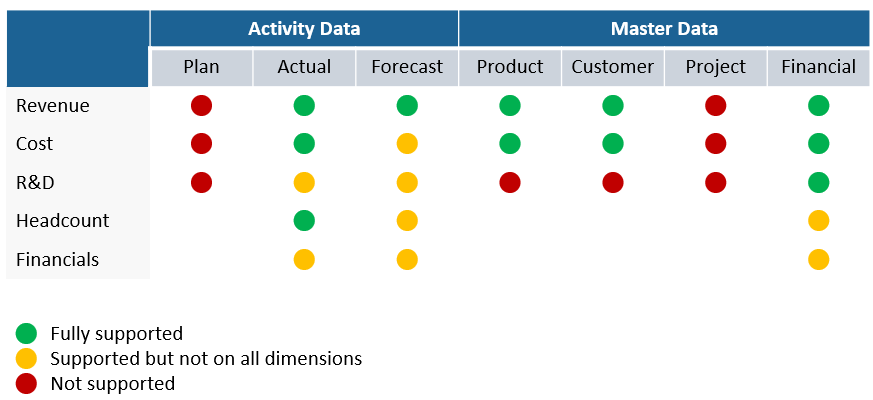 That’s the way entrepreneurs normally think: first, they make a plan and invest in it, then they measure actual performance compared to the plan. They reforecast the results and adjust along the way. Plan, execute, then adjust. If you don’t capture all three of these types of data for each business function, then you’ve got gaps in your data platform.
Find your company’s real decision data: the original plan. Build your analytics around it. It’s the most important data that’s not in your analytics system.
 Buy now on Amazon