Data Management Best Practices for Leaders
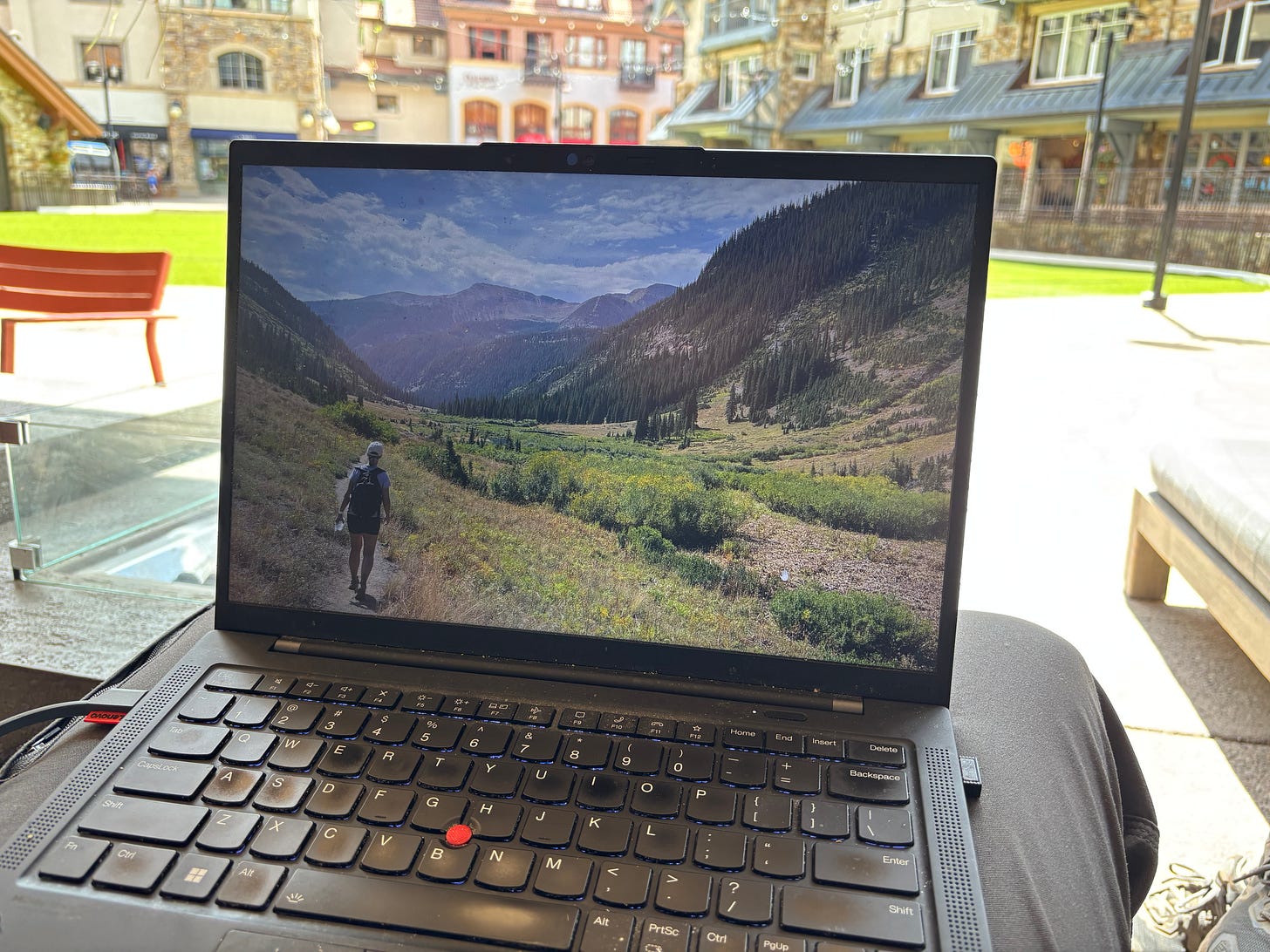 Telluride, Colorado, August 2025
Imagine a world without email.
That sentence alone might scare you. Every email message that lands in your inbox gives you another opportunity to overreact to the news it delivers, but the fear of underreacting forces you to open the next email. Everyone in your company also watches their inbox, thus, email takes on a life of its own. The CC lists grow, forcing everyone to follow the drama, and from the outside, your workplace looks like a hyperactive beehive.
Cal Newport argues that most things we use email for waste time and worsen our decision-making. He created this thought experiment—a world without email—to show that we use it for many more reasons than we should. Even though Newport acknowledges some legitimate uses of email, his provocative title forces you to rethink why you need it in the first place.
One of the best ways to find legitimate uses for something is to threaten to take it away. Permanently.
Maybe we could survive without email.
A World Without Reports
It’s hard to imagine a world without reports, partly because I'm not sure anyone agrees on what a report is. But I have a clear image in mind because, back in the day, Crystal Reports made me feel like a reporting rock star.
People used this legendary report-building software (first released in 1984) to create standard templates for formatting and distributing data. You could summarize data, calculate values, and filter data with parameters. Every day, the template would reconnect to the database, update the numbers, and distribute (via email) that day’s version of the output to the people on the distribution list.
The latest version of Crystal (14.4. x), now sold by SAP, came out just this past March. It’s trying hard to stick around.
However, the term “report” today means much more than it did in those early days. People use it to describe anything from a dashboard, a daily email with data, a window in a software application, an Excel file, or a PowerPoint template someone prepares manually.
I use the broadest possible definition for “report”: it includes any data presentation that uses logic for linking, translating, or changing the data people use for decisions. Understood this way, you can see the massive amount of reporting work companies do; people and systems constantly transform and translate data at every opportunity.
Will we ever get rid of reports?
The Go-Between
You’ve probably never seen a data team that doesn’t spend most of its time building logic and distributing reports. People take it for granted that all data needs some kind of go-between (like a report) to be useful for decisions. That assumption (you can’t use unmediated data) is so ingrained in how most companies work that they don’t even recognize it. Yet they feel the constant friction in their business decisions, in the daunting work of pulling data together, and in the very bones of every business analyst.
People become the reporting machine.
I’m questioning that assumption. Neither people nor machines should mediate your data. I’ll explore legitimate uses for reports in an upcoming post, but I want you to see how easily “reporting solutions” distract you from the real value of a good data strategy. Like firefighters who work to prevent fires, the people managing your data strategy should eliminate the need for reports in the first place.
This isn’t just a thought experiment. The huge companies I worked at ran their business on a single “Flash” report that every division used to track customer demand. The secret? Analytic data that was easily accessible, highly integrated with financial data, and powerful enough to support a ton of users simultaneously.
Life in a world with fewer reports could be much better.