
EVEglyph Design · Position
Two doors. One platform.
Two entry points onto one platform. A parish that owns its own front door, and a child who builds structure instead of consuming a feed. The same ground sits under both — your data, your record, your way out.
One side
The Churches
Thirteen parishes, four countries, nine languages. The parish owns the site, the content, the domain name and the exit.
- Locally hosted, no tracking, no advertising. Every dollar the parish saves stays in the community.
- The Charitable Ledger records what people already do for one another — one deed, one witness, one hour.
- Fork it and walk away at any time. Where a parish already has an IT volunteer, that volunteer keeps their place.
The other side
The Children
Integration and education inside a structured environment — bounded to the parish, the school and the village, never opened onto a feed.
- The child structures the material herself. Sorting, naming and relating is the lesson, and she keeps what she builds at the end of it.
- Standing is earned through evidenced service to other people. No followers, no streaks, no engagement machinery pointed at a developing mind.
- The household decides what its family meets. Safety first, betterment second, and everything else third.
Additive, never substitutive. We do not break a working system to prove a better one exists, we contract for non-competition with the incumbents, and we hold the retraining capacity for the people this moves.
Read the full position — The Additive Position → Enter the platform ↓
A parish website belongs to the parish.
13 parishes across four countries, one design canon, nine languages. Locally hosted. No tracking. No advertising. No third-party predators. Every dollar stays in the community.
Choose a parish to enter its site. Every parish site shares the same EVE Glyph Design canon, so navigation and typography stay familiar. Each parish's official site remains the source of truth — this is a mirror prepared with care, ready to be handed over to the parish's existing IT volunteer whenever they want it.
United States
Lenexa, Kansas and St. Augustine, Florida.
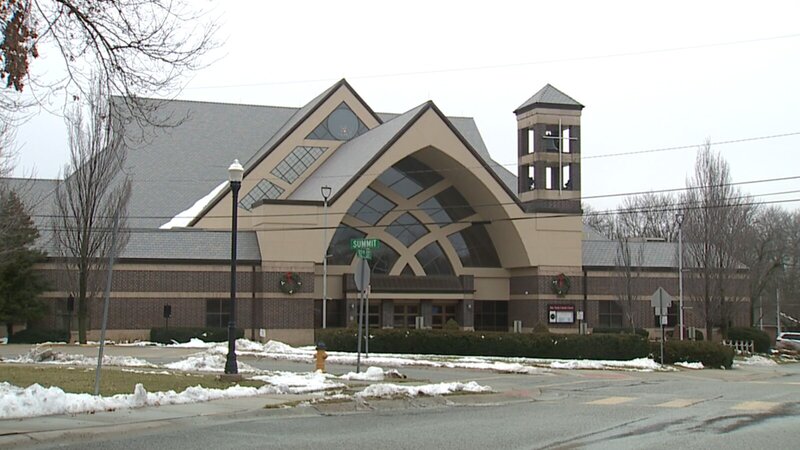

Holy Trinity — Lenexa
Lenexa, Kansas · 13615 West 92nd Street
Home parish of Council of Palms #6673, Knights of Columbus.
Founded 1979 · Archdiocese of Kansas City in Kansas · Council of Palms #6673, Knights of Columbus
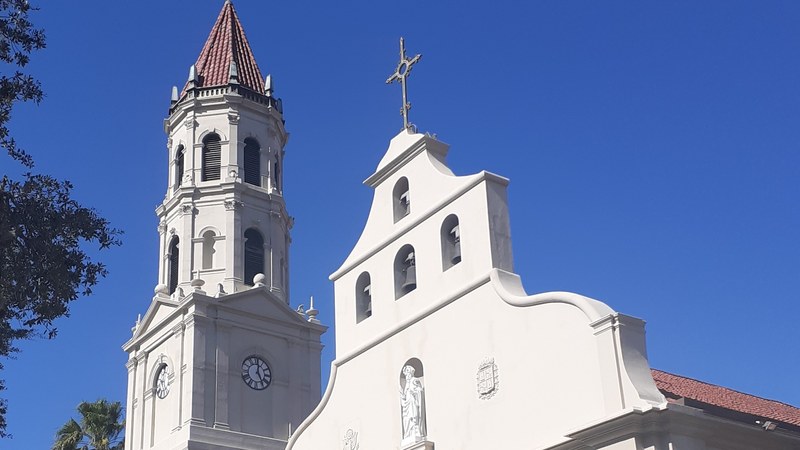

Cathedral Basilica of St. Augustine
St. Augustine, Florida · 38 Cathedral Place
The oldest Catholic congregation on the continent of the United States. Mass has been celebrated here since 1565.
Congregation 1565 · Present church 1793–1797 · Minor basilica 1976 · Diocese of St. Augustine
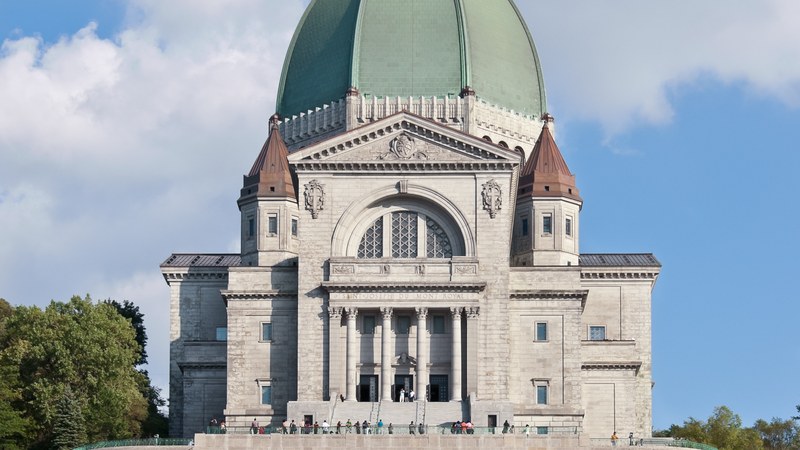
Montréal
The one on the mountain.

Atlantic Canada
New Brunswick, Prince Edward Island, Nova Scotia.
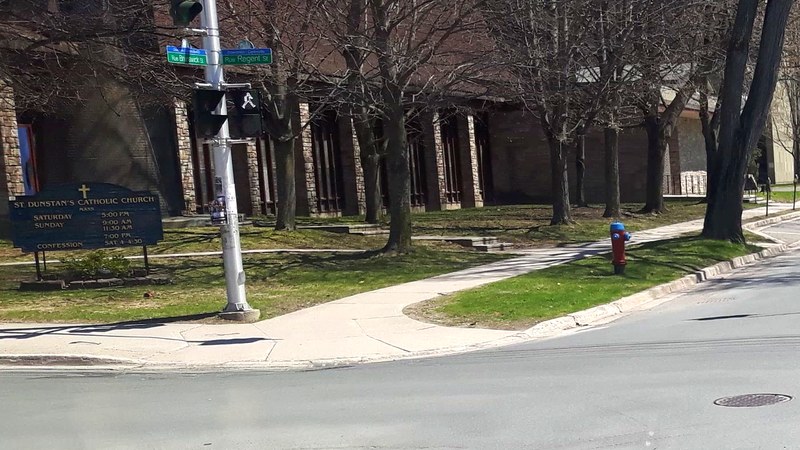

St. Dunstan's — Fredericton
Fredericton, New Brunswick · 120 Regent Street
The founding parish of Catholic Fredericton, and the first cathedral of New Brunswick.
Resident priest 1827 · First cathedral of New Brunswick 1843 · Present church 1965 · Diocese of Saint John
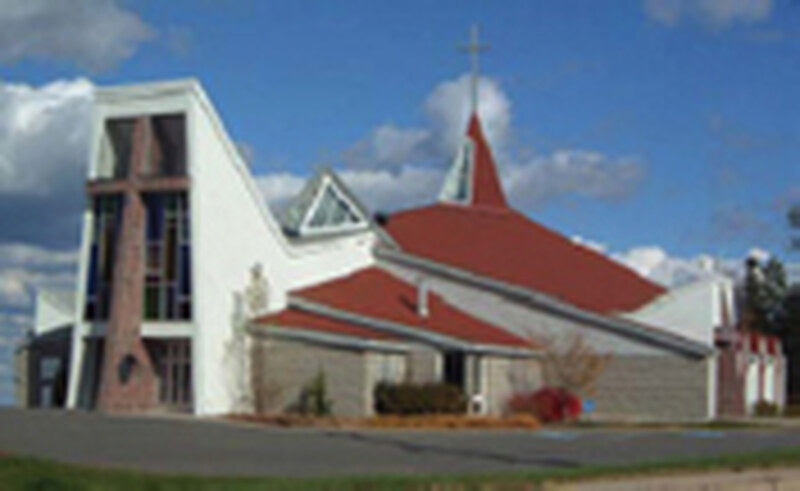

Sainte-Anne-des-Pays-Bas
Fredericton, Nouveau-Brunswick · 715 rue Priestman
French-speaking parish founded in 1981. Non-official mirror under the EVE Glyph doctrine.
Parish founded 1981 · Church 2001 · Archdiocese of Moncton
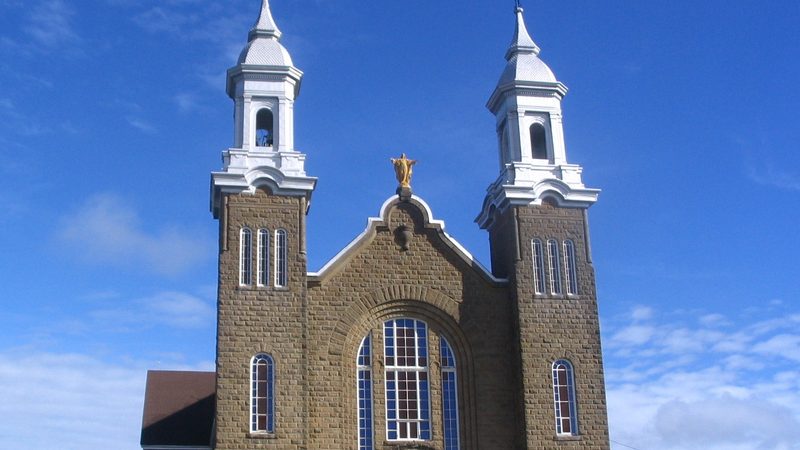

Saint-Augustin de Paquetville
Paquetville, Nouveau-Brunswick · 3585, rue Principale
Acadian parish of the village of Paquetville, the Thériault family's heritage.
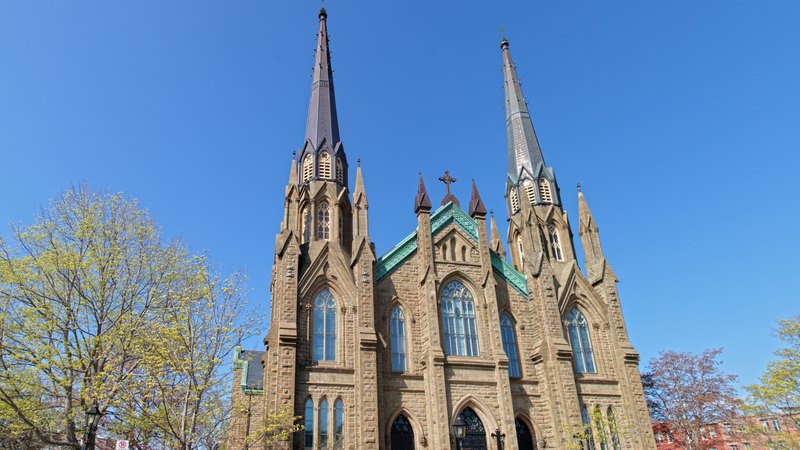

St. Dunstan's Basilica
Charlottetown, Prince Edward Island · 65 Great George Street
Mother church of the Diocese of Charlottetown. Founded in 1816.
Parish 1816 · Cathedral 1829 · Fire 1913 · Present church 1919 · Basilica 1929 · National Historic Site 1990
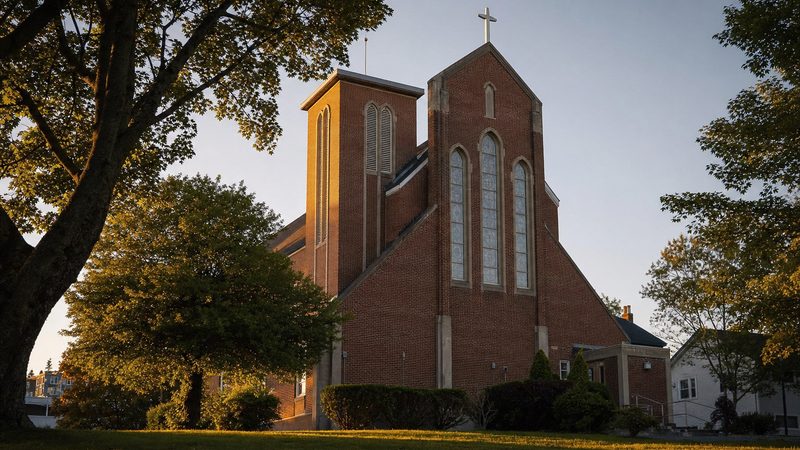

Saint Catherine of Siena
Halifax, Nova Scotia · 6476 Bayers Road
Home of the Franciscans of Halifax. Serving the western district of Halifax since 1948.
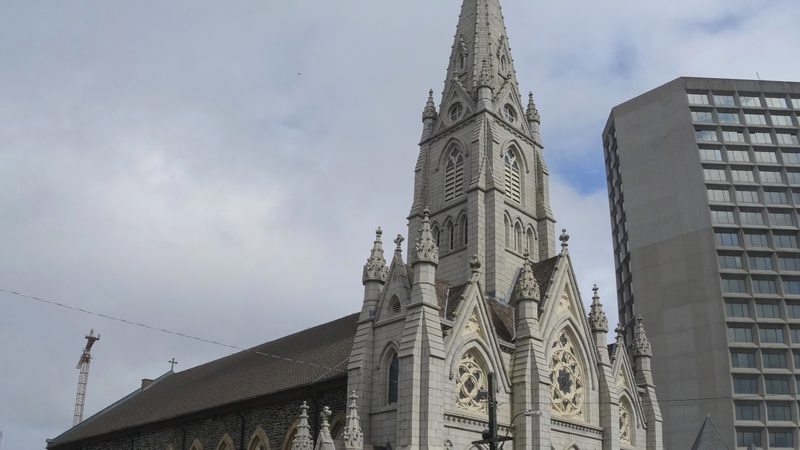

St. Mary's Cathedral Basilica
Halifax, Nova Scotia · 5221 Spring Garden Road
Mother church of the Archdiocese of Halifax-Yarmouth. Gothic Revival style, National Historic Site of Canada.
México
Bahía de Banderas, Nayarit — the marina coast.

Sagrada Familia — Nuevo Vallarta
Las Jarretaderas, Nayarit · J. María Morelos e Independencia
Parish of the village of Las Jarretaderas, at the entrance to Nuevo Vallarta, its marina and the hospital corridor.
Quasi-parish · Diocese of Tepic · Deanery of Bahía de Banderas

Paradise Village — Nuevo Vallarta
Nuevo Vallarta, Nayarit · Paradise Plaza, Paseo de los Cocoteros
The English-language Sunday Mass celebrated inside Paradise Plaza at Nuevo Vallarta, intended for the people of the marina area.
A standing Sunday Mass, not a canonically erected parish · Diócesis de Tepic · Decanato Bahía de Banderas

La Santa Cruz — La Cruz de Huanacaxtle
La Cruz de Huanacaxtle, Nayarit · Calle Marlín 38
Parish of a Nayarit fishing village turned nautical port, next to the Marina Riviera Nayarit.
Diocese of Tepic · Deanery of Bahía de Banderas
Ελλάδα · Greece
Nafplio, Argolis — the first capital, and the church that keeps the names of the Philhellenes.
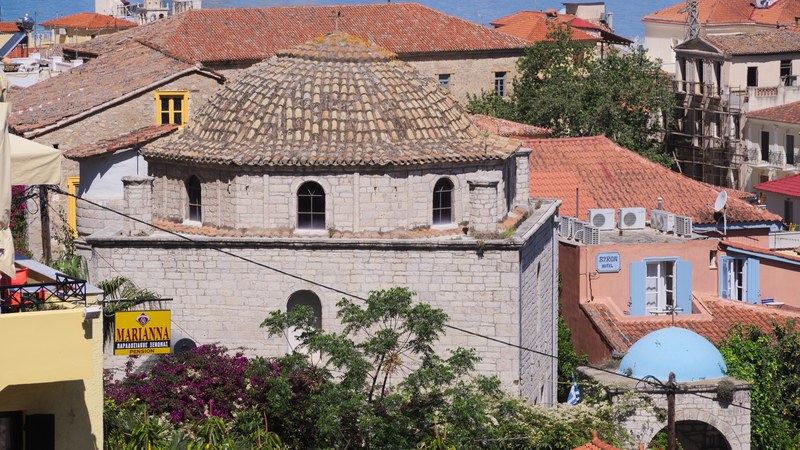

The Charitable Ledger
A running record of what people already do around here — a purchase, an hour of help, a favour from someone with a trade — so it adds up somewhere and the parish can see it.
- Buy through the parish code, and the savings reach the parish.
- An hour of help, signed off by one witness, is entered on the ledger.
- Someone with a trade — plumber, accountant, nurse — can contribute their hour at its true rate.
- One page, and the whole parish can read it.
What this is
13 Catholic parishes, each with a mirrored site under a shared editorial template. Same header, same footer, same navigation — but each parish keeps its own crest, Mass times, contact information and diocesan link. If a parish already has an IT volunteer, this is not a replacement; it is an option they can inspect, fork, or ignore.
Locally hosted
Static site on GitHub Pages or the parish's own hosting. No third-party dashboard, no vendor lock-in.
No tracking
No cookies. No analytics. No third-party scripts other than Google Fonts. Marked noindex, nofollow until the parish approves publication.
Full parish ownership
The parish owns its content, its own domain name and its own exit. Fork the repository, take it home, and carry on.
Consistent design
A shared EVE Glyph Design canon, so parishioners moving between parish sites feel at home.
Nine languages, one baseline
This surface is not English with translations attached. Every text is first carried to a single Latin baseline, and every other language is rendered from that baseline. Latin is the pivot because it is the language the Church already holds in common, and because a pivot means no living language is subject to another living language.
Latin, English, French, Spanish, Italian, Portuguese, Romanian, Greek and Swahili. Greek is rendered from the Latin baseline just like every other language. Swahili is here because the platform is meant for all people, not only the wealthy — a person should be able to show this to their mother and sister in the language they actually think in, and be understood.
Proper names, street addresses, telephone numbers and clock times are never translated. They are rendered exactly as the parish publishes them, in every language.
For the Knights of Columbus
This is what scale within a week looks like — with no offense intended.
If the Knights want to make parish web presence uniform across a diocese, this template can bring up a new parish site within about an hour. But that is not what is being offered. What is offered is a choice:
- The existing IT volunteer stays in place. If a Brother Knight or parishioner already runs the parish site, nothing is disturbed. This platform is available if they want to switch or fork it; otherwise it stands beside their existing work as a reference.
- The money stays in the parish. No annual hosting fees, no website subscriptions, no advertising credits. Static hosting is free, and every dollar the parish saves stays in the community.
- Parishioners stay safe. No tracking, no engagement-optimized feeds, no algorithmic exposure of children, women or the vulnerable. A parish site is a parish site — not a data-extraction surface for a remote platform.
- The Knights remain in charge. Ownership, doctrine and exit rights belong to the parish and its Council. The design canon is a shared reference, not a contract with a vendor.
Council of Palms #6673 (Holy Trinity, Lenexa) is the reference council for this build.
Doctrine
No profiling of individuals
No parishioner is counted, categorized or targeted by this platform. Ever.
Safety first, betterment second
The safety of content and identity comes before growth, engagement or profit.
Founder credit
Design founder: Donat Omer Thériault, EVE Glyph Design. This credit is irrevocable.
Parish sovereignty
The parish binds the platform, receives a governance receipt, and may exit at any time with a full export of its content.
A note — and who were the Acadians, anyway?
Down here at the bottom, because it is a note, not a sales pitch.
Long before all the parishes above, there was one at Port-Royal, in what is now Nova Scotia: Saint-Jean-Baptiste, founded 1613. Capuchin friars ran the mission from 1632. The first Catholic parish in what later became Canada.
Then most of the records ceased to exist. In 1654 a force from New England, led by Robert Sedgwick, took Port-Royal, killed the Capuchin superior Léonard de Chartres and expelled his fellow friars — against the terms of the capitulation they had just signed. Two registers survive: 1702–1728 and 1727–1755, now at the Centre acadien of Université Sainte-Anne. Everything before 1702 has perished.
The Greek card above is the other half of the same idea. In Nafplio, a wooden arch erected in 1841 carries the names of roughly 280 foreigners who died for someone else's homeland, each one with the place where he fell written beside it. Someone decided those names were worth keeping. In Port-Royal, someone decided ours were not.
People ask whether Rome kept a copy. Rome handles governance, not the sacraments — there is no central baptismal register in the Vatican. Baptisms are recorded in the parish, full stop. When the parish burns, that is the end of it.
One set, however, did make the journey. The registers of Saint-Charles-des-Mines from Grand-Pré went with the deported Acadians to Maryland, then to Louisiana, and were handed over to the priest at Fort San Gabriel in 1767. Today they sit in the vaults of the Diocese of Baton Rouge.
And no, this is not a claim that we are the oldest Catholic anything in North America. St. Augustine, Florida has the year 1565 — it is the second card at the top of this page. San Miguel Chapel in Santa Fe is around 1610. Port-Royal is only the first one that is ours, and the one whose records were burned.
Full account — the Acadian lineage page →
The Congrès mondial acadien gathers the Acadian diaspora every five years. It is held by the Société Nationale de l'Acadie, and the 2029 congress will take place from 8 to 18 August in the Baie-des-Chaleurs, the region that includes Paquetville. Credit where it is due: the Acadian story belongs to that institution and to the people who carry it, not to this page. Anyone who wants the record from a legitimate source rather than from us should start there.